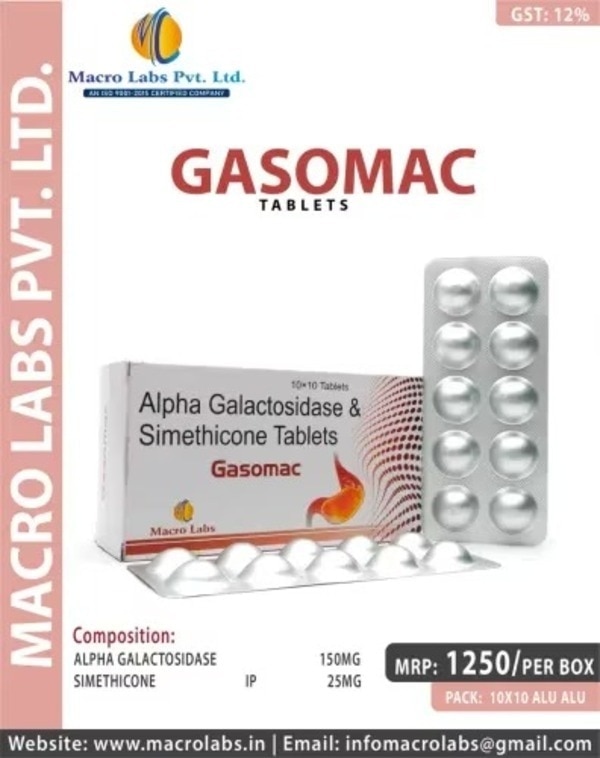
Adding one gastrointestinal SKU affects legal compliance, counselling, shelf space, cash flow, and expiry exposure—not just sales potential. By the end, you will have a practical way to verify Gasomac’s product details, measure local demand, test its economics, and decide whether the supplier and channel fit your pharmacy.
Key takeaways
- Confirm Gasomac’s composition, strength, dosage form, and registration details.
- Match expected demand with local prescribing patterns before adding stock.
- Calculate net margin after discounts, slow stock, returns, and expiry losses.
- Demand batch traceability, storage details, and a valid supplier licence copy.
What Must Be Verified Before Gasomac Enters the Range?
A responsible Gasomac portfolio evaluation starts with product evidence, not brand familiarity or expected demand. The supplied material does not identify Gasomac’s composition, so do not compare it with an antacid, antiflatulent, digestive, proton-pump inhibitor, H2 blocker, or combination gastrointestinal product until the details are confirmed.
1. Obtain the product label, package insert, and supplier records. Verify the exact active ingredient or ingredients, strength, dosage form, pack size, approved indication wording, administration instructions, age restrictions, contraindications, interactions, adverse effects, and storage conditions.
2. Ask whether Gasomac is a prescription medicine, OTC product, medical device, or nutraceutical. Map that category to the applicable Indian regulator, licence, labelling rules, permitted claims, and sale schedule. Confirm Schedule H, H1, or X status rather than assuming ordinary OTC sale.
An H1 product needs the prescribed warning and sale records retained for three years; Schedule X products bring additional storage and recordkeeping controls.
3. Check the legal manufacturer and marketer, manufacturing licence, sale licence, product-level authorization, batch number, expiry date, storage statement, GST details, and invoice traceability. Compare the licence documents with the exact strength and dosage form offered.
4. Treat a general GMP claim as insufficient: it may describe a facility or quality system, but it does not prove that this specific product is licensed or legally saleable through your intended pharmacy channel. If any document is missing, pause the range decision and request written clarification.
Which Customers and Prescribing Patterns Justify Stocking It?
Stock Gasomac only when your own records show demand, not because acidity complaints are common. Review six to twelve months of prescription lines, OTC enquiries, gastrointestinal SKU sales, lost-sales notes, nearby clinic and gastroenterology prescribing, hospital discharge prescriptions, and seasonal changes.
Separate symptom-led OTC purchases from prescription-driven demand, then identify customer groups, repeat-use situations, prescribed strengths, dosage forms, and pack sizes.
For gasomac for pharmacies, audit every existing gastrointestinal SKU:
- Active ingredient and strength
- Dosage form and pack size
- Schedule or OTC status
- Monthly units sold
- Patient price
- Therapeutic overlap and different dosing
Flag duplication with antacids, antiflatulents, digestives, proton-pump inhibitors, H2 blockers, and combination products. A different legal control or dosing schedule still creates separate dispensing work.
| Pharmacy setting | Demand evidence to check | What it does not prove |
|---|---|---|
| Neighbourhood | OTC enquiries, repeat buyers, seasonal movement | That prescription demand exists |
| Rural | Common local prescriptions, refill continuity, pack affordability | That every dosage form will move |
| Clinic-adjacent | Nearby general-practice and gastroenterology prescriptions | That doctors use this molecule |
| Hospital-linked | Discharge prescriptions and follow-up refills | That inpatient use continues locally |
A poor fit exists when current coverage is sufficient, nearby prescribers do not use the molecule or form, storage conditions cannot be supported, or demand rests on assumptions. Do not approve a SKU until its exact strength, form, pack size, and expected monthly movement are evidenced.
How Should You Test Margin, Stock Turn, and Expiry Risk?
Use actual landed cost, not printed MRP, to test Gasomac product selection. Confirm the active ingredient, strength, dosage form, pack size, prescription status, shelf life, patient familiarity, competitor brands, and local monthly demand.
Compare the pharmacy’s real selling price with the applicable retail-price rule; products covered by the Drugs (Prices Control) Order, 2013 may have price controls that reduce an apparent margin.
| Measure | Existing overlapping product | Gasomac trial check |
|---|---|---|
| Purchase cost | ₹32 | ₹29 |
| Selling price | ₹45 | ₹42 |
| Gross margin per unit | ₹13 | ₹13 |
| Monthly movement | 18 units | 6-unit working assumption |
| Shelf life | Record it | 12 months |
The example gives the same gross margin per unit, not a better one. Subtract discounts, expiry losses, unrecovered returns, and the pharmacy’s working-capital cost before deciding. Record the supplier’s written short-expiry return threshold; do not treat all 12 months as usable stock if delivery, handling, or return processing consumes time.
Use this calculation template:
- Monthly gross margin = units sold × (selling price − landed cost).
- Opening stock = projected monthly units × trial coverage. At six units monthly, 12 units provide roughly two months.
- Reorder point = units needed during delivery lead time. Six units is the stated starting point if that quantity covers the supplier’s lead time.
- Reject any order larger than the return window can absorb before expiry.
Run a two-week trial for uncertain OTC demand or a one-month trial for prescription-led demand. Set a small opening quantity, written reorder point, minimum remaining shelf life at delivery, and written credit or replacement terms. This is a calculation template, not a forecast.
What Must Staff Check Before Recommending or Dispensing It?
A symptom complaint is not enough to recommend Gasomac. Staff must establish whether self-care is appropriate, follow the approved label, and record what was supplied.
1. Check the approved label and package insert before counselling. Confirm the exact dose, frequency, administration timing, age limits, duration, contraindications, interactions, adverse effects, and storage conditions. Do not use promotional wording as diagnosis or treatment guidance.
2. Ask how long the problem has lasted, whether it recurs or has no clear explanation, and which medicines the person already takes. Ask whether the person is pregnant, breastfeeding, a child, or an older adult taking multiple medicines.
3. Refer for medical assessment for severe or persistent pain, vomiting, gastrointestinal bleeding, black stools, difficulty swallowing, unintentional weight loss, fever, chest pain, dehydration, or repeated symptoms. Do not claim that Gasomac treats an undiagnosed condition, prevents complications, or is interchangeable with another gastrointestinal product.
4. Stop the recommendation and quarantine the decision if the pack, insert, or supplier cannot confirm composition, dosing, contraindications, interactions, storage, or adverse-effect information. Seek written clarification from the manufacturer or a qualified pharmacist; never improvise.
5. Train staff on approved claims and referral triggers, then record the batch supplied. Segregate damaged packs, check expiry dates, and monitor storage. Add time for batch counting, shelf checks, and stock rotation because one more SKU creates operational work.
What Should You Demand From the Gasomac Supplier Before Ordering?
The answer to is gasomac a good fit for my pharmacy portfolio is yes only if it passes four tests: legal saleability, measurable local demand, landed margin after expiry losses, and reliable supplier service. A low price cannot offset prescription-control, storage, or working-capital problems.
Ask Macro Labs Pvt Ltd, or any proposed gasomac pharma supplier, for written answers to these questions:
- Who is the legal manufacturer and marketer? Which licence covers this exact product, strength, dosage form, and pack size? What product registration or regulatory status applies?
- Can you provide the approved label, package insert, batch release or quality records, invoice traceability, GST details, and a named pharmacovigilance or complaint contact?
- What are the minimum order quantity, delivery lead time, credit terms, and minimum remaining shelf life at delivery?
- What is the process for damaged stock, recalls, short-expiry stock, expiry returns, replacement, and credit? State the expiry-return window and every threshold in writing.
- How will we trace a batch from an invoice to stock and affected customers across multiple branches?
| Evidence | Acceptable standard | Warning sign |
|---|---|---|
| Legal saleability | Product-level documents match the pack | Generic GMP claim only |
| Demand | Local units by strength and form support a trial | Catalogue breadth replaces sales evidence |
| Margin | Landed margin includes expiry and return losses | Calculation uses printed MRP alone |
| Service | Written terms, prompt replies, clear recall steps | Verbal promises or inconsistent documents |
Reject an opening quantity that cannot sell before the return window or usable shelf life ends. Place a trial only after checking storage, staffing, and working-capital limits; completeness, response time, and consistency with the pack decide the supplier.
Related product
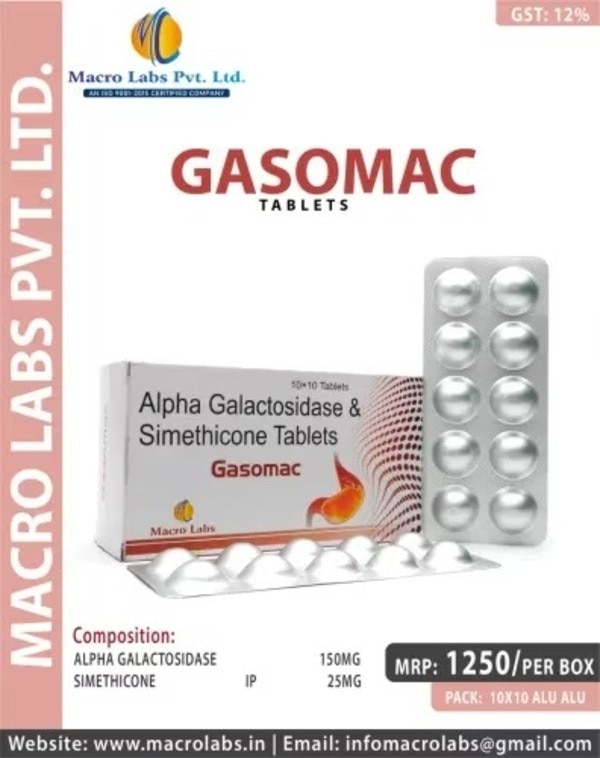
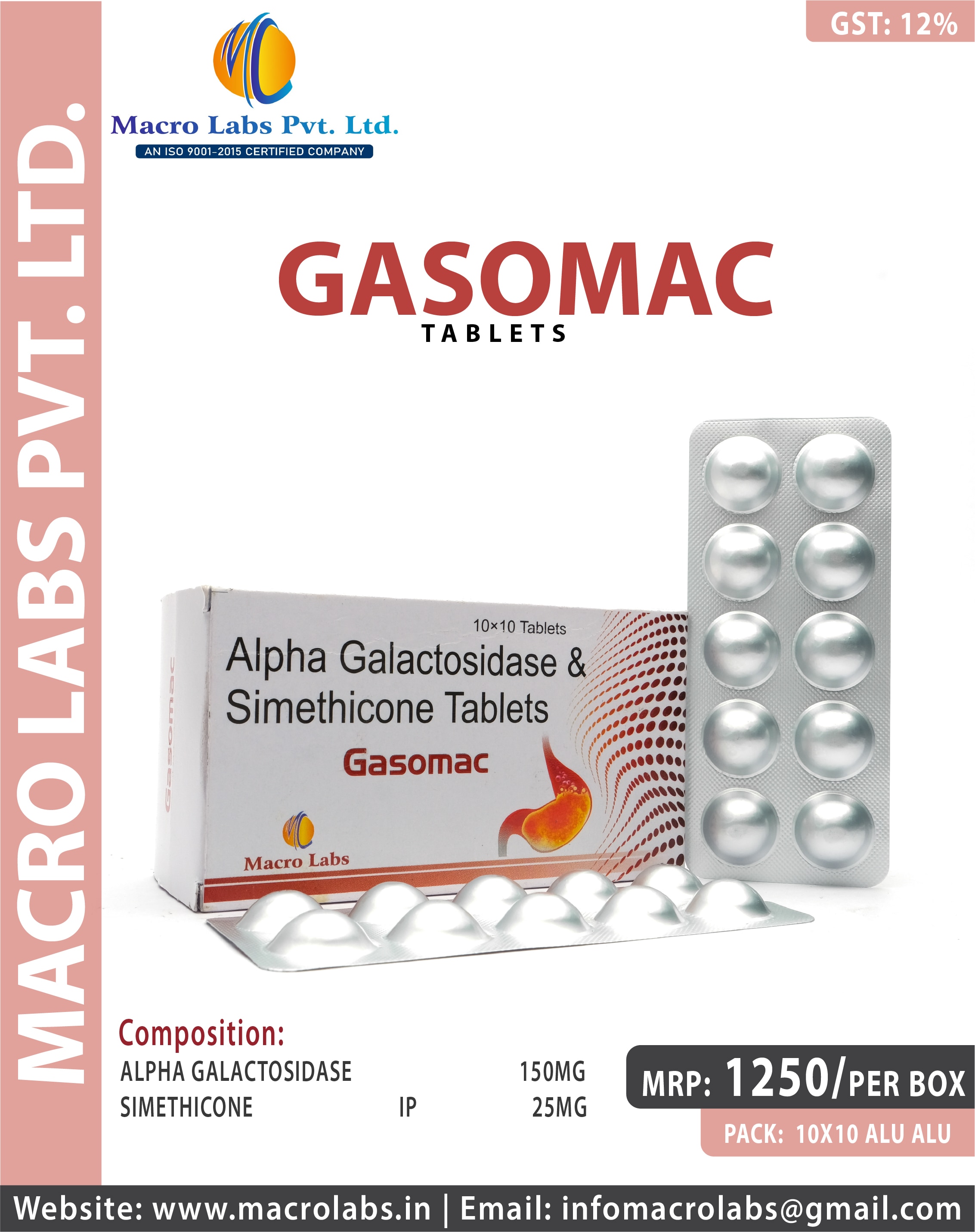 | Gasomac Gasomac by Macro Labs Pvt. Ltd. is an effective gastrointestinal formulation designed to provide quick relief from acidity, gas, bloating, and indigestion. |
Frequently asked questions
What must you verify before adding Gasomac to a pharmacy range?
Confirm the composition, strength, dosage form, indications, pack size, batch details, expiry date, storage conditions, and regulatory documents. Do not classify Gasomac as an antacid, antiflatulent, digestive, proton-pump inhibitor, H2 blocker, or combination product until its composition is documented.
Which customers and prescribing patterns justify stocking Gasomac?
Review prescriptions and requests from your actual customer base, including gastrointestinal indications, repeat demand, preferred dosage forms, and competing brands. Stock it when documented demand supports a realistic sales rate rather than relying on brand familiarity.
How do you test Gasomac’s margin, stock turn, and expiry risk?
Calculate net selling margin after purchase cost, discounts, taxes, delivery, retailer markdowns, returns, and expired stock. Set a trial quantity based on expected weekly sales, record the sell-through rate, and reorder only when the result supports the product’s shelf life.
What should a pharmacy demand from a Gasomac supplier before ordering?
Request the product specification, price list, invoice terms, batch and expiry information, storage and transport requirements, replacement policy for damaged or near-expiry stock, and a copy of the supplier’s applicable drug-sale licence. Ask how the supplier handles recalls and batch traceability.
Keywords